
When the autumn leaves fall and the first frost hits the ground, the peak camping season comes to an end. For many motorhome and caravan owners across Europe, it is time to park the vehicle for the cold winter months.
Leaving your home-on-wheels sitting idle in freezing temperatures without preparation can lead to incredibly expensive repairs come spring. Frozen pipes, dead batteries, and mold growth are the most common winter enemies.
Fortunately, protecting your investment is straightforward. Follow our step-by-step winterization guide to ensure your vehicle stays safe, dry, and ready for your next spring adventure.
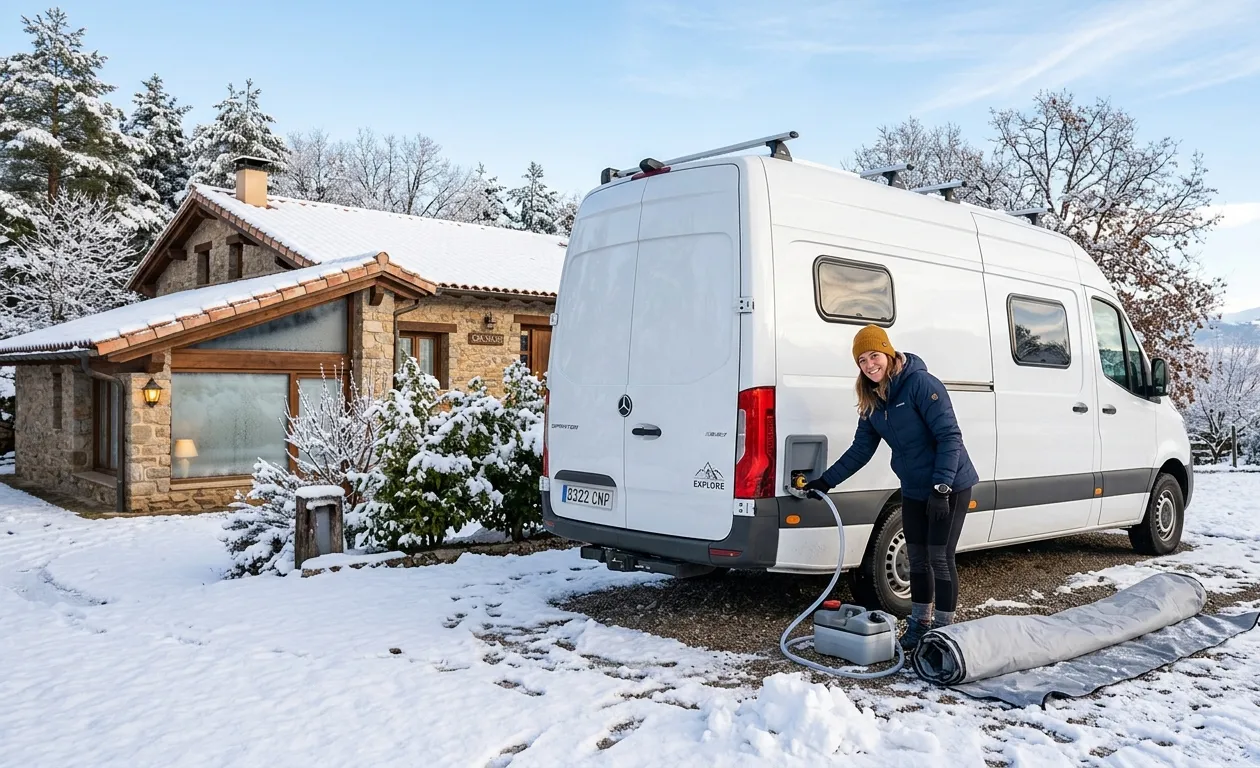
💧 Step 1: Drain the Entire Water System
Water expands when it freezes. If water is left inside your pipes, taps, or boiler, it will crack the plastic fittings and ruin your plumbing system. This is the single most important step of the winterization process.
Your Winter Plumbing Checklist:
- Empty the Fresh and Waste Tanks: Open all external drain valves and let the freshwater and greywater tanks empty completely.
- Drain the Water Heater (Boiler): Switch off your water heater and locate its safety drain valve (often called a FrostControl valve). Open it to drain the reservoir.
- Open All Taps: Turn on all water taps inside the vehicle (kitchen, bathroom, and shower) and leave them in the open, middle position (between hot and cold).
- Run the Pump Briefly: Turn on your water pump for just 10–15 seconds to push out any remaining water trapped in the internal lines, then switch it off at the main control panel.
🔋 Step 2: Care for Your Batteries
Freezing temperatures are brutal on 12V batteries. A battery that sits flat in the cold will rapidly lose its capacity and permanently degrade.
How to Protect Your Power Supply:
- Fully Charge First: Give your leisure and engine batteries a full 24-hour charge before storage.
- Disconnect or Maintain: If you are storing the vehicle at home, keep it plugged into mains power occasionally to let the smart charger maintain the batteries.
- The Removal Method: If you are storing your camper in a remote facility without power, disconnect the negative terminals or remove the batteries entirely and store them in a cool, frost-free garage at home on a trickle charger.
🛋️ Step 3: Protect the Interior from Moisture and Pests
Stale, cold air combined with trapped humidity creates the perfect breeding ground for mold and mildew. At the same time, mice look for warm winter shelters.
Interior Prep Tips:
- Remove All Food: Clear out every single food item from the cupboards and fridge. Thoroughly wipe down surfaces so there are no crumbs left to attract rodents.
- Leave the Fridge Open: Clean the refrigerator and prop the door open slightly using the winter latch to prevent foul odors and mold.
- Lift the Cushions: Stand your fabric cushions, mattresses, and seating upholstery upright in the middle of the lounge. This allows air to circulate around them freely.
- Use Moisture Absorbers: Place two or three passive dehumidifier crystals or moisture-absorbing bowls inside the living space to trap excess air humidity.
🚐 Step 4: Exterior & Tyres Prep
Before you walk away from your camper for the season, don’t forget about the exterior shell and the chassis components.
Final Outside Checks:
- Give it a Wash: Wash off dirt, moss, and road salt from the bodywork. Apply a quality caravan wax to add a protective layer against harsh winter weather.
- Inflate the Tyres: Overinflate your tyres slightly (by about 0.2 bar above normal operational pressure) to prevent flat spots from forming while sitting in one place for months. Move the vehicle a few inches backward or forward once a month if possible.
- Release the Handbrake: If your caravan or motorhome is parked on perfectly level ground and safely secured with heavy wheel chocks, leave the handbrake off. Keeping the handbrake engaged for months can cause the brake shoes to seize to the drums.
💡 Summary: Preparation Saves Money
Taking two hours to properly winterize your caravan or motorhome is the best insurance policy you can have. When spring returns and the highways call your name, you won’t have to deal with broken pipes or flat batteries. Instead, you’ll simply fill up the fresh water, turn the key, and head out on your next unforgettable journey!